Visual guide library
Good questions deserve more than a wall of text.
Explore illustrated explainers about body systems, symptom patterns, products, tests, and conversations. They help you orient, not self-diagnose.

The body lab
One symptom can involve several connected layers.
Select a layer to see what it contributes.
Selected layer
Skin and lining
Vulvar skin and vaginal tissue respond to friction, products, hormones, infection, inflammation, and treatment. What you see is only one part of the story.Open a related guide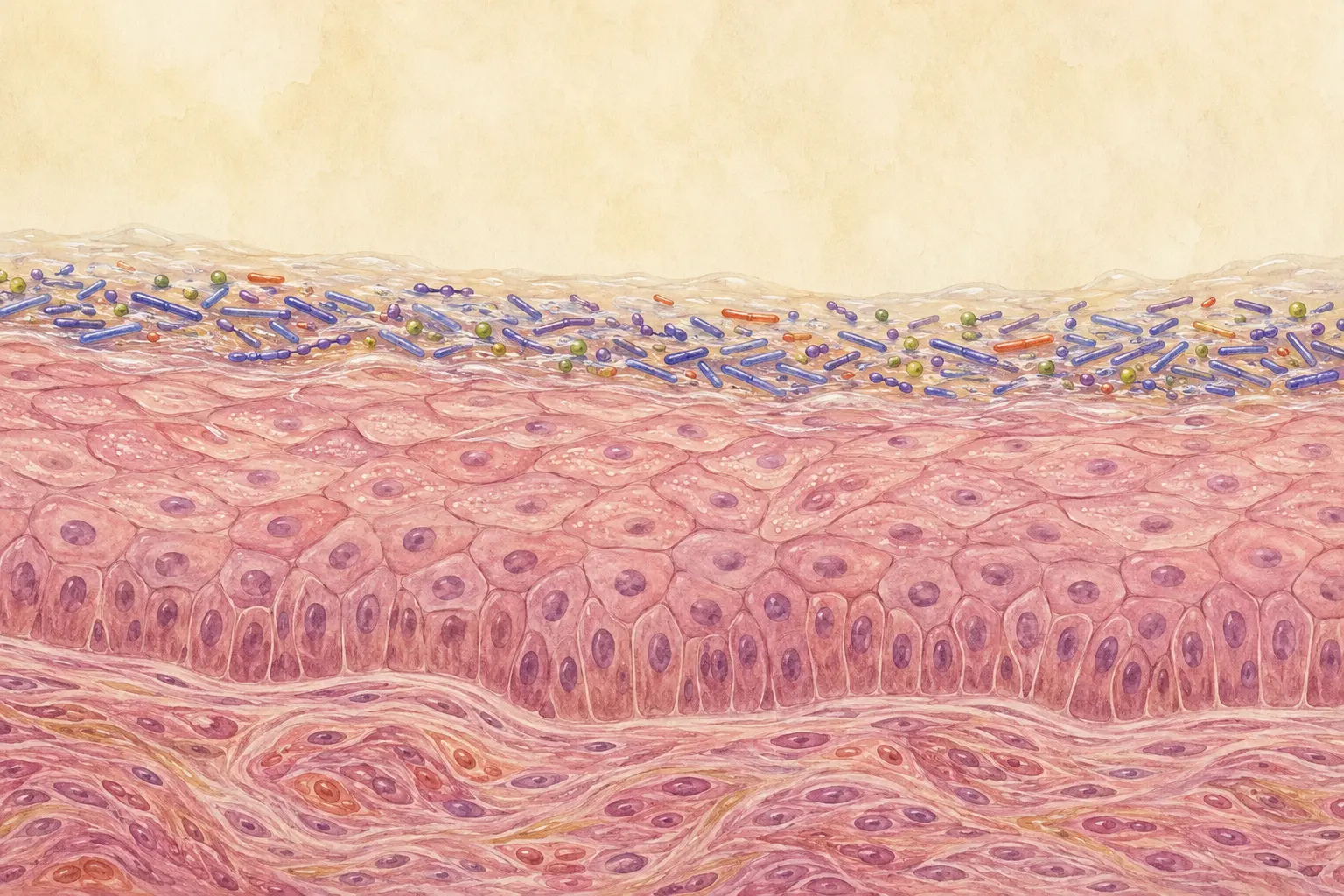
body basics / 5 minute visual guide
Meet the vaginal microbiome
An ecosystem, not a cleanliness scoreThe vagina contains communities of microorganisms that can shift with hormones, sex, medication, bleeding, and other changes. A shift is not a moral failure or proof that someone is unclean.
symptom patterns / 6 minute visual guide
BV, yeast, or irritation?
Why the clues overlapItching, odor, discharge, and burning are not a home lab test. This guide shows what each clue can and cannot tell you and why repeated guessing often fails.
symptom patterns / 7 minute visual guide
A map of pain
Surface, opening, deep, or urinaryWhere pain is felt can help organize the possibilities, even when the exact location is hard to name. This is a conversation map, not a diagnosis map.
symptom patterns / 4 minute visual guide
A lump near the opening
Understanding Bartholin gland swellingA tender or painless lump near one side of the vaginal opening can have several causes. One possibility is a blocked Bartholin gland, which may form a cyst or become infected.
symptom patterns / 7 minute visual guide
When vulvar pain keeps returning
Persistent pain is not imaginaryVulvodynia is persistent vulvar pain without one clear visible cause. Burning, rawness, stinging, or pain with touch can be real even when an early test or examination is normal.
symptom patterns / 6 minute visual guide
Pressure, heaviness, or a bulge
What pelvic support can feel likePelvic pressure can involve muscles, organs, bowel, bladder, pregnancy, postpartum recovery, or pelvic organ prolapse. The sensation deserves context, not shame.
care / 4 minute visual guide
Could something be retained?
Tampon, cup, condom, or another itemA retained item can cause odor, discharge, pressure, or discomfort. It is a practical problem, not something to be embarrassed about.
care / 5 minute visual guide
Lubricant or moisturizer?
Two products with different jobsLubricants reduce friction during sexual activity. Vaginal moisturizers are used on a schedule to help with ongoing dryness. Neither product should be framed as making a body cleaner or younger.
appointments / 8 minute visual guide
Your first pelvic exam, visually explained
Conversation, choices, then only what is relevantA visit may involve no pelvic exam, an external look, a speculum exam, a bimanual exam, or a test. Each step should have a reason and your ongoing consent.
body basics / 6 minute visual guide
A practical vulvar skin decoder
Bumps, color, texture, sores, and changeVulvar skin has follicles, glands, folds, veins, pigment, and natural asymmetry. A new or changing area needs attention when it persists, hurts, itches, bleeds, ulcerates, or does not heal.
body basics / 7 minute visual guide
How hormones change tissue
Puberty, cycles, postpartum, menopause, and gender-affirming careHormones can affect discharge, lubrication, elasticity, sensitivity, bleeding, urinary comfort, and how tissue responds to friction. The same symptom can need a different conversation in a different context.
symptom patterns / 5 minute visual guide
When it burns to pee
Bladder, urethra, vulvar skin, or something elseBurning can come from the urinary tract or from urine touching irritated vulvar tissue. Discharge, sores, urgency, back pain, fever, and exposure history help guide testing.
body basics / 6 minute visual guide
Tight, loose, or something more specific?
Translating a loaded body wordPeople use tight or loose to describe muscle tension, pressure, pain, arousal, lubrication, tissue change, prolapse, childbirth recovery, or anxiety. The word is a starting point, not a verdict about anatomy or sex.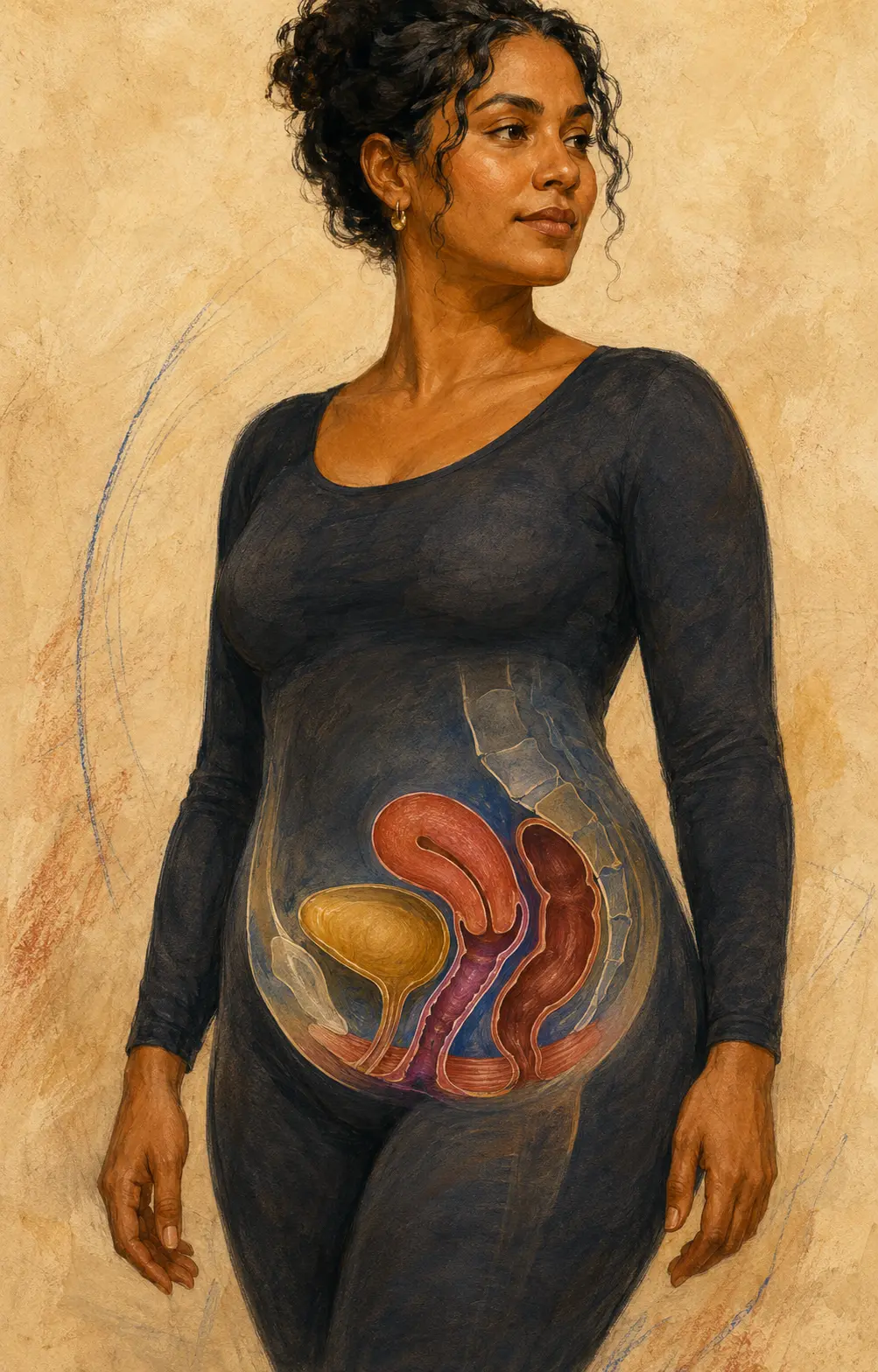
body basics / 7 minute visual guide
The vulva variation atlas
Shape, color, folds, hair, and asymmetryThere is no single standard vulva. This guide shows the kinds of variation people may notice without sorting bodies into better, worse, normal, or abnormal-looking categories.
pleasure / 7 minute visual guide
A shame-free guide to self-pleasure
Curiosity, comfort, and no required outcomeMasturbation can be a way to explore sensation, relax, or learn what feels comfortable. It does not need to involve penetration, a toy, an orgasm, or any particular frequency.
products / 8 minute visual guide
Choose a toy without the hype
Stimulation, controls, material, fit, and cleaningThe best first toy is not the loudest, most expensive, or most complicated. Start with the sensation you want and the features that make it easy to use, clean, store, and stop.
pleasure / 7 minute visual guide
Arousal and orgasm are not a performance test
Desire, stimulation, attention, and contextDesire may appear before sexual activity, build after touch begins, or not appear at all. Orgasm is one possible experience, not proof that sex was good or that a body works correctly.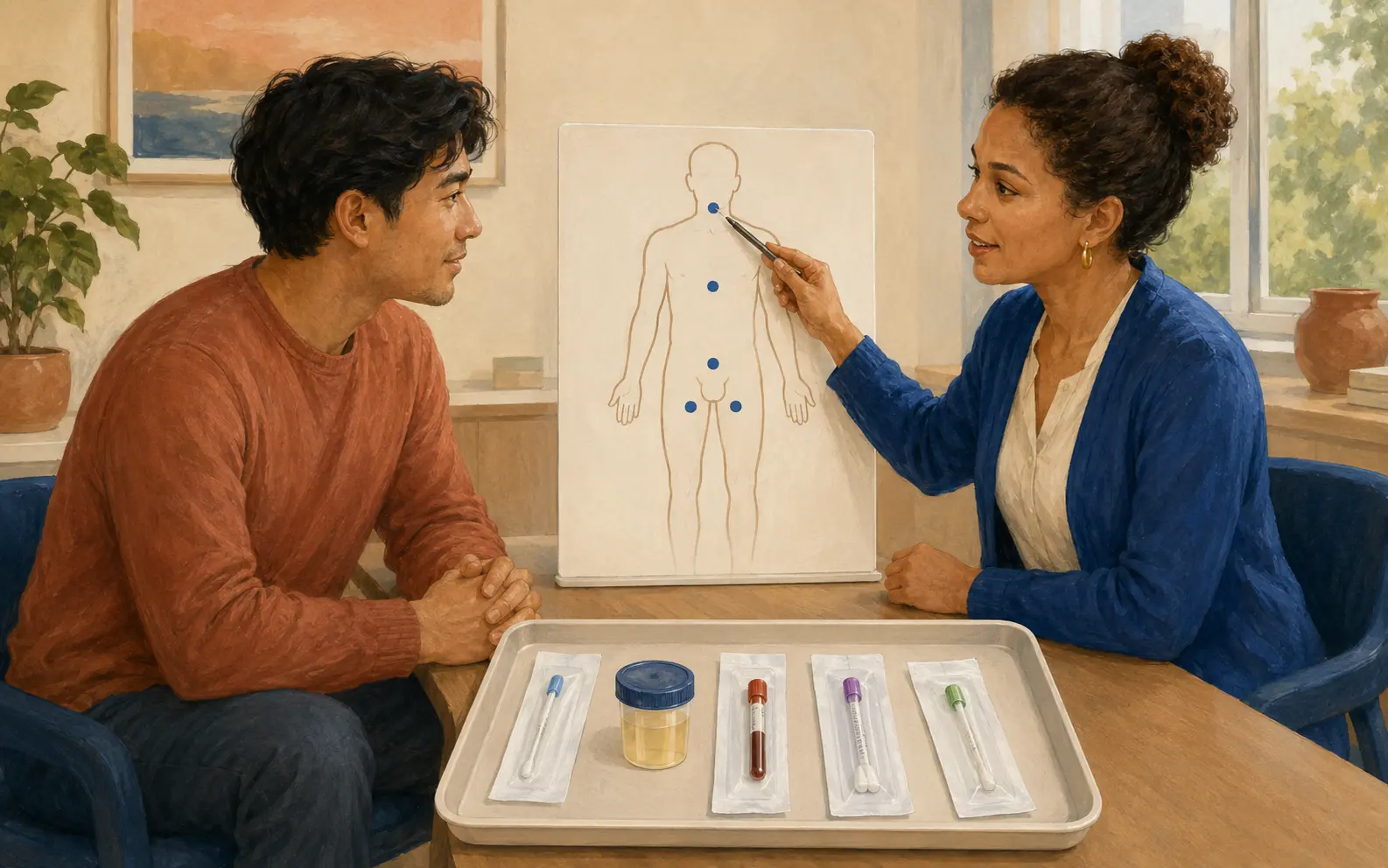
sexual health / 8 minute visual guide
STI testing follows the contact
Mouth, genitals, rectum, skin, and shared toysMany STIs cause no symptoms. The useful testing conversation starts with what kind of contact happened, which body sites were involved, when it happened, and what prevention was used.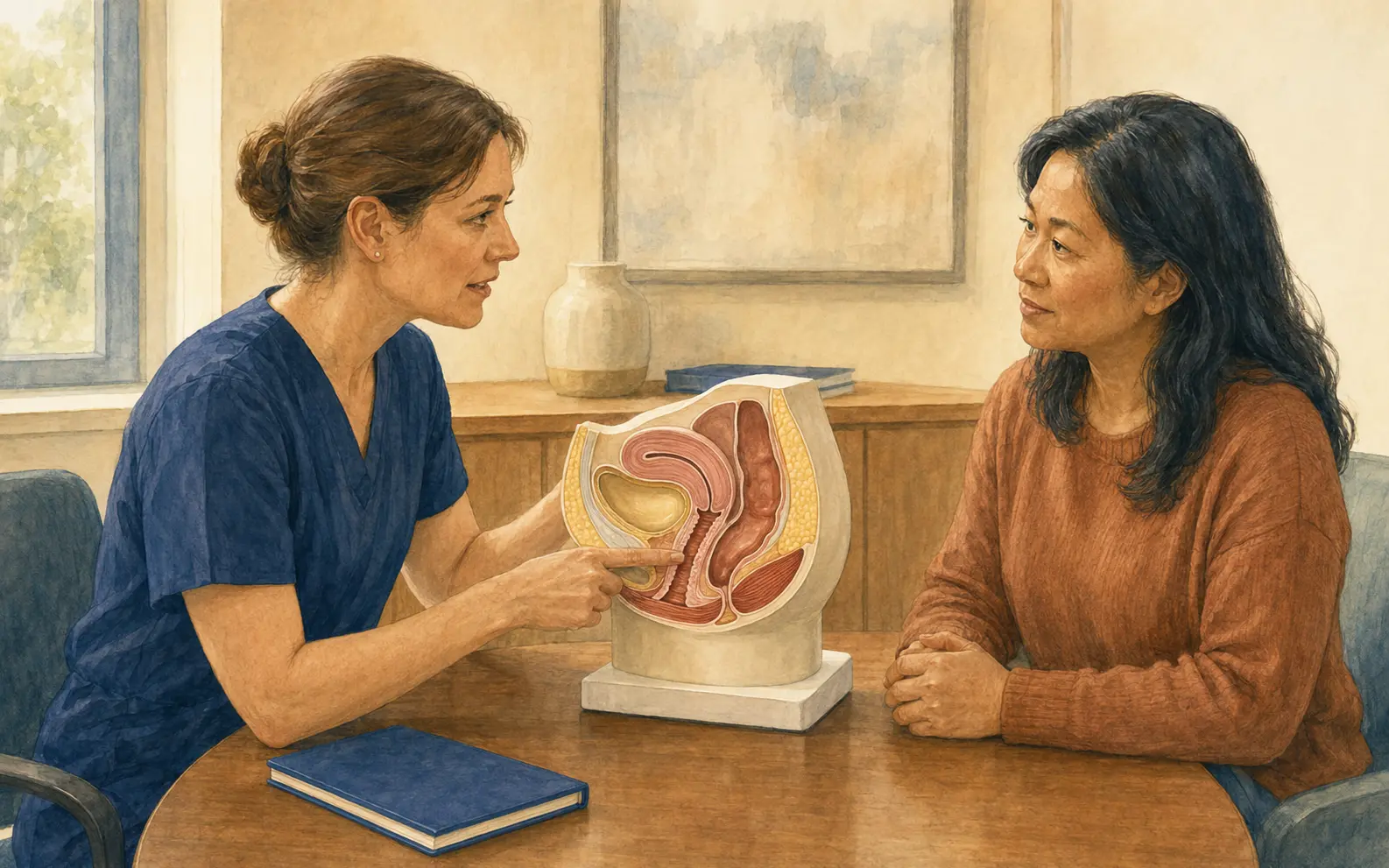
sexual health / 8 minute visual guide
Anal and vaginal penetration are not interchangeable
Different tissue, lubrication, bacteria, and safety needsThe vagina and rectum sit close together but behave differently. Understanding lubrication, stretching, bacteria transfer, pain, and product design helps reduce injury and infection risk.
sexual health / 9 minute visual guide
A contraception conversation compass
Match the method to your prioritiesEffectiveness matters, but so do bleeding changes, hormones, privacy, cost, reversibility, health history, pregnancy timing, and how often you want to think about a method.
life stages / 6 minute visual guide
Track a cycle without giving away your life
Useful patterns, minimal data, your controlA short cycle record can help you notice changes and prepare for care without requiring an account, prediction algorithm, or a permanent log of intimate details.
life stages / 8 minute visual guide
Pleasure and desire through life
Pregnancy, birth, menopause, illness, and agingSexuality does not expire, and it does not stay the same. Tissue, energy, medications, body image, relationships, caregiving, disability, grief, and health can all change what intimacy looks like.
pleasure / 7 minute visual guide
Body image belongs in sexual health
Being seen without being gradedMedia, pornography, beauty marketing, comments, surgery advertising, race, gender norms, disability, aging, and past experiences can shape how someone feels about their vulva and body.Three-question anatomy warm-up
Know the words. Skip the shame.
This tiny quiz is about orientation, not being corrected.