Tests and examinations

Know what may happen before it happens.

The right evaluation depends on the concern. Not every visit requires every exam or test.

Check a current concern
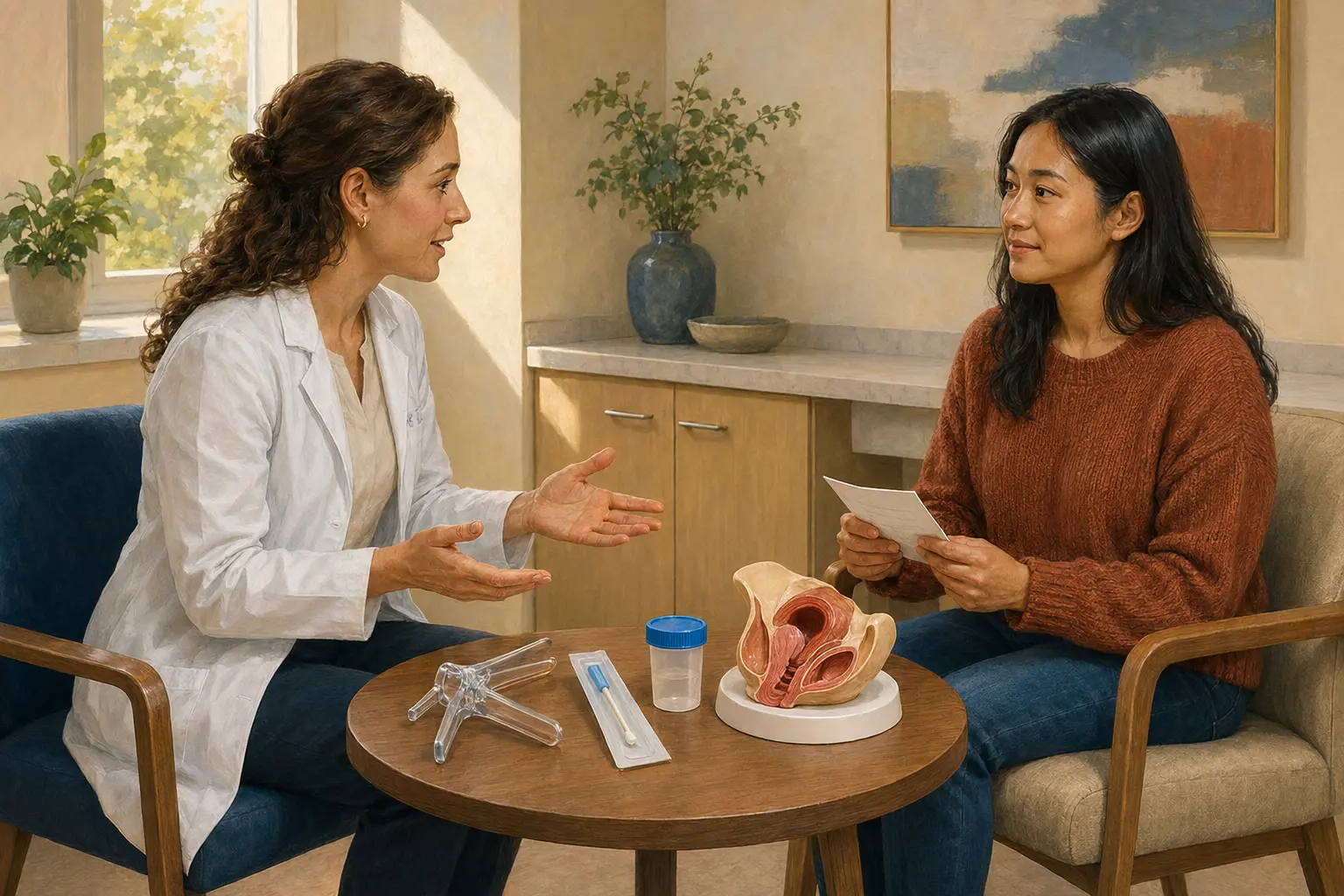
A clinician shows a patient an examination instrument and self-collection kit before discussing which steps are relevant.
Original editorial illustration. Not clinical evidence or a diagnostic image.
01

Conversation first

A clinician may ask about timing, location, pregnancy possibility, periods, sexual exposure, products, medications, hormones, surgery, and what makes symptoms better or worse.

  • You can ask why a question matters
  • You can use the appointment note
  • Relevant anatomy matters more than assumptions about identity
02

Possible examination

Depending on the concern, an exam may include looking at external skin, gentle touch, a speculum exam, or a bimanual pelvic exam. Each part should have a reason and ongoing consent.

  • Ask what each step can show
  • Request a pause, different position, smaller instrument, or support person
  • You can decline or stop
03

Possible tests

Urine, vaginal swabs, self-collected samples, blood tests, pregnancy testing, cervical screening, biopsy, ultrasound, or other imaging may be considered depending on the situation.

  • Ask how and when results will arrive
  • Screening is different from testing a symptom
  • A negative test does not answer every possible cause