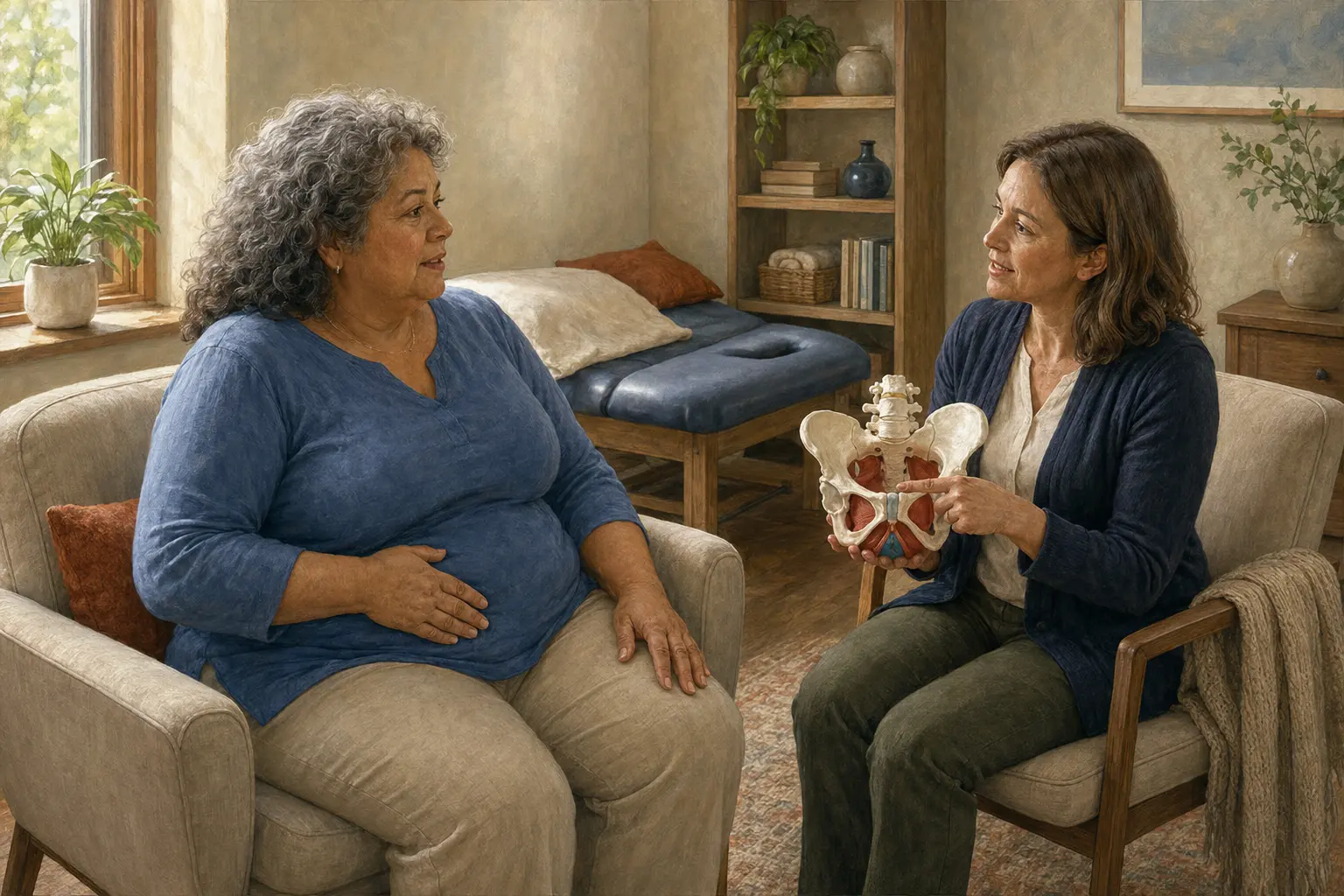
The support system
Pelvic-floor muscles and connective tissues support the bladder, uterus or vaginal vault, and rectum. Support can change after birth, surgery, menopause, chronic straining, or other factors.
- Pressure may change through the day
- Urinary and bowel symptoms can overlap
- Pain is not required
What to track
Note bulging, heaviness, leakage, trouble emptying the bladder or bowel, discomfort with activity, and whether symptoms improve when lying down.
- Bring a short timeline
- Mention births and surgeries
- Describe activity impact
What help can look like
Options depend on anatomy, symptoms, goals, and severity. They may include pelvic-floor therapy, a pessary, symptom management, or surgery.
- More Kegels are not always the answer
- Ask about non-surgical options
- Inability to urinate needs urgent care
Sources behind this guide
Evidence checked July 15, 2026. Independent clinician review is still required before public launch.