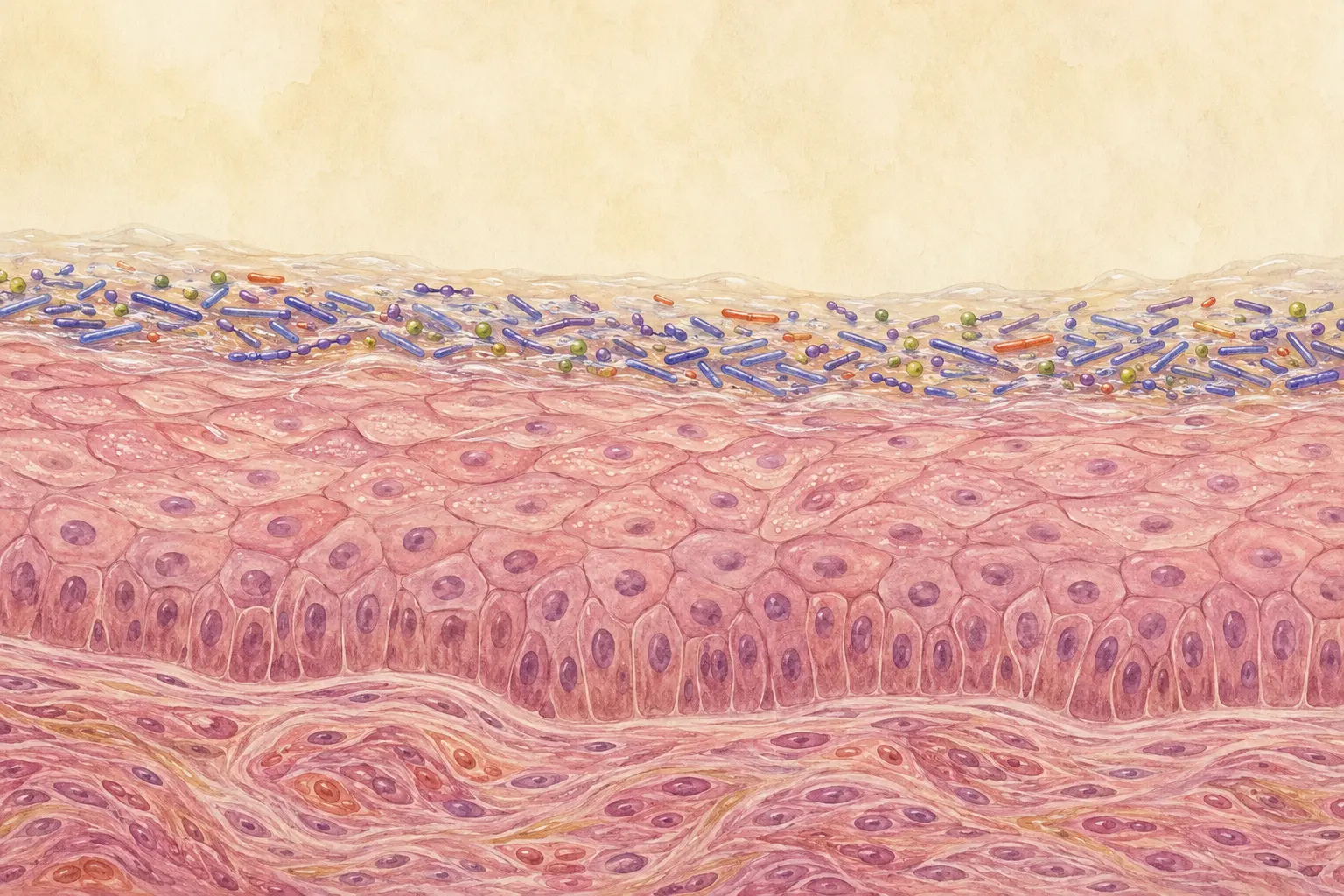
What lives there
Vaginal microbial communities are dynamic. Lactobacillus species are common in many healthy vaginal environments, but no single snapshot defines every healthy person.
- Microbes are expected
- The mix can change
- A lab result needs symptom context
What can shift it
Hormones, menstruation, semen, antibiotics, douching, products, and sexual activity can affect the local environment. That does not tell you the cause of a symptom by itself.
- Track what changed
- Avoid internal cleansing
- Do not treat a test result without clinical context
When testing helps
New odor, discharge, irritation, pain, or burning can overlap across BV, yeast, STIs, irritation, and other conditions. Examination or a vaginal sample can help separate them.
- Appearance is not a diagnosis
- Pregnancy changes the stakes
- Recurring symptoms deserve confirmation
Sources behind this guide
CDCAbout Bacterial VaginosisCDCVulvovaginal Symptoms and Vaginal DischargeACOGVaginitisOffice on Women’s HealthDouching
Evidence checked July 15, 2026. Independent clinician review is still required before public launch.