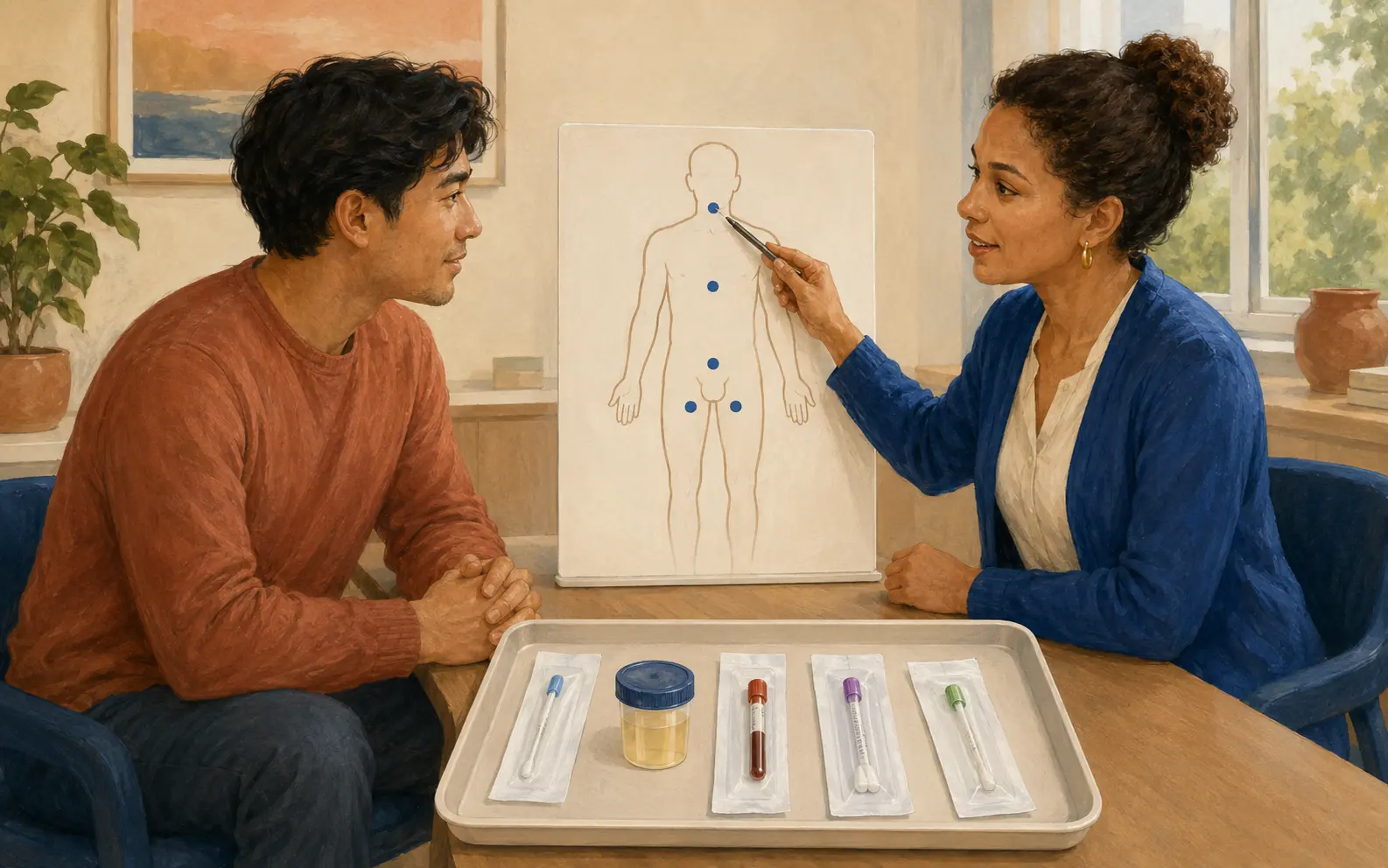
Name the sites
Oral, vaginal, anal, and genital skin-to-skin contact can create different testing needs. A throat or rectal swab may be relevant when those sites were exposed.
- Symptoms are not required
- Testing windows differ
- Ask what each sample checks
Prevention is layered
Condoms and barriers, vaccination, testing, fewer exposures, mutually agreed relationship practices, and HIV prevention options can work together.
- Birth control is not STI protection
- Skin-to-skin infections may spread beyond condom coverage
- A new barrier is needed between body sites
Make the visit easier
A clinician needs practical information, not a moral story. You can say what body parts touched, what barriers were used, and what you want tested.
- Ask about self-collected swabs
- Ask when to retest
- Pregnancy changes some testing priorities
Sources behind this guide
CDCHow to Prevent STIsCDCSTI Screening RecommendationsCDCVulvovaginal Symptoms and Vaginal DischargeWHOSexual Health
Evidence checked July 15, 2026. Independent clinician review is still required before public launch.