Before anything physical
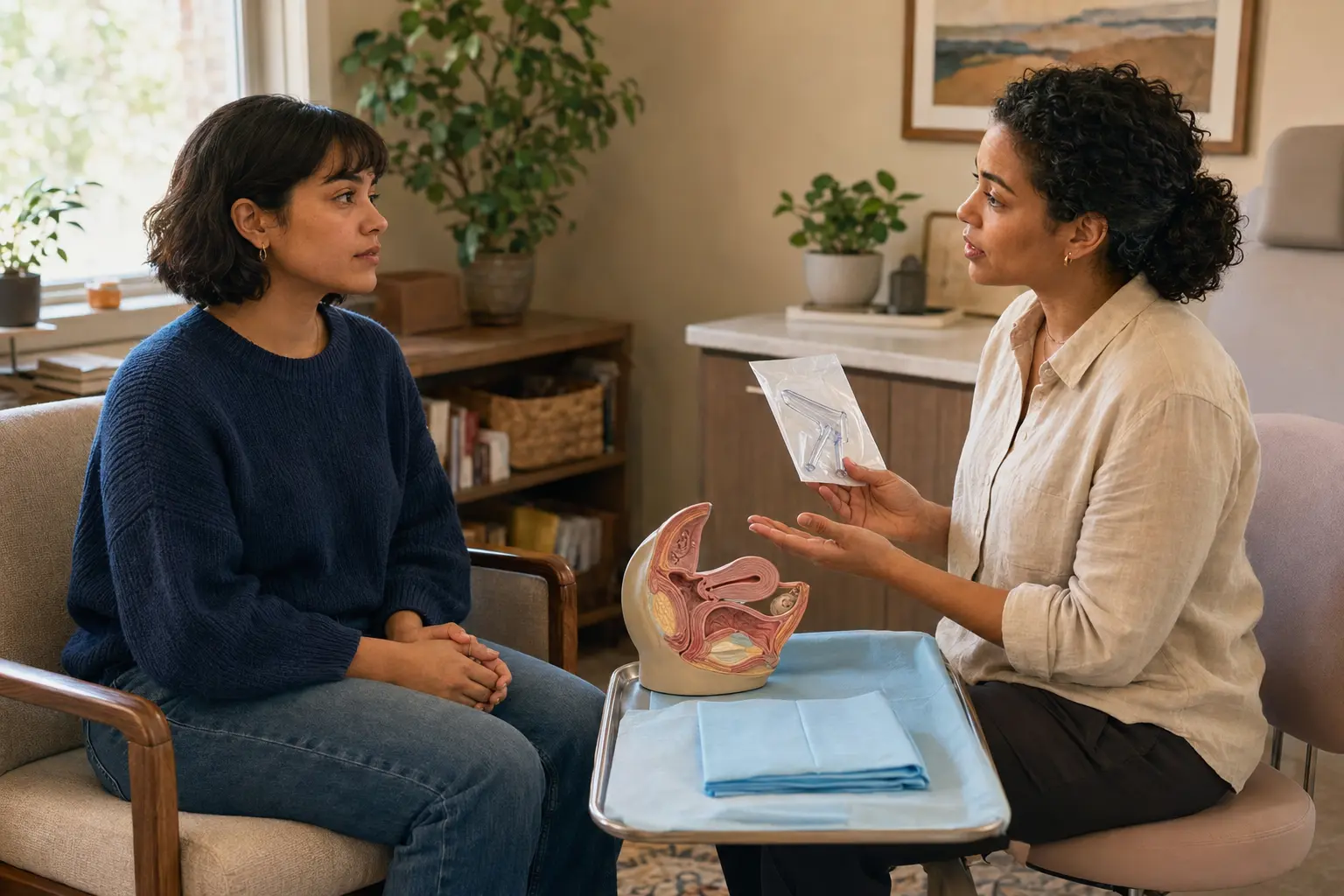
The visit should begin with conversation about your concern, history, goals, and what would make the visit feel manageable.
- Ask what is recommended and why
- Share trauma concerns only if you choose
- Request a support person or chaperone
Possible steps
An external exam looks at vulvar skin. A speculum allows a view of the vaginal walls and cervix. A bimanual exam uses gloved fingers and a hand on the abdomen to assess some pelvic structures.
- Not every concern needs every step
- Ask to see an instrument first
- Request the smallest appropriate speculum
Your control continues
Consent is not a one-time yes. You can ask for more explanation, insert a speculum yourself when appropriate, choose a different position, pause, or end the exam.
- Agree on a stop signal
- Ask about pain control
- Ask how results will arrive
Sources behind this guide
ACOGThe Initial Reproductive Health VisitACOGPain Management for In-Office Uterine and Cervical ProceduresUCSF Gender Affirming Health ProgramTransgender Patients and the Physical Examination
Evidence checked July 15, 2026. Independent clinician review is still required before public launch.