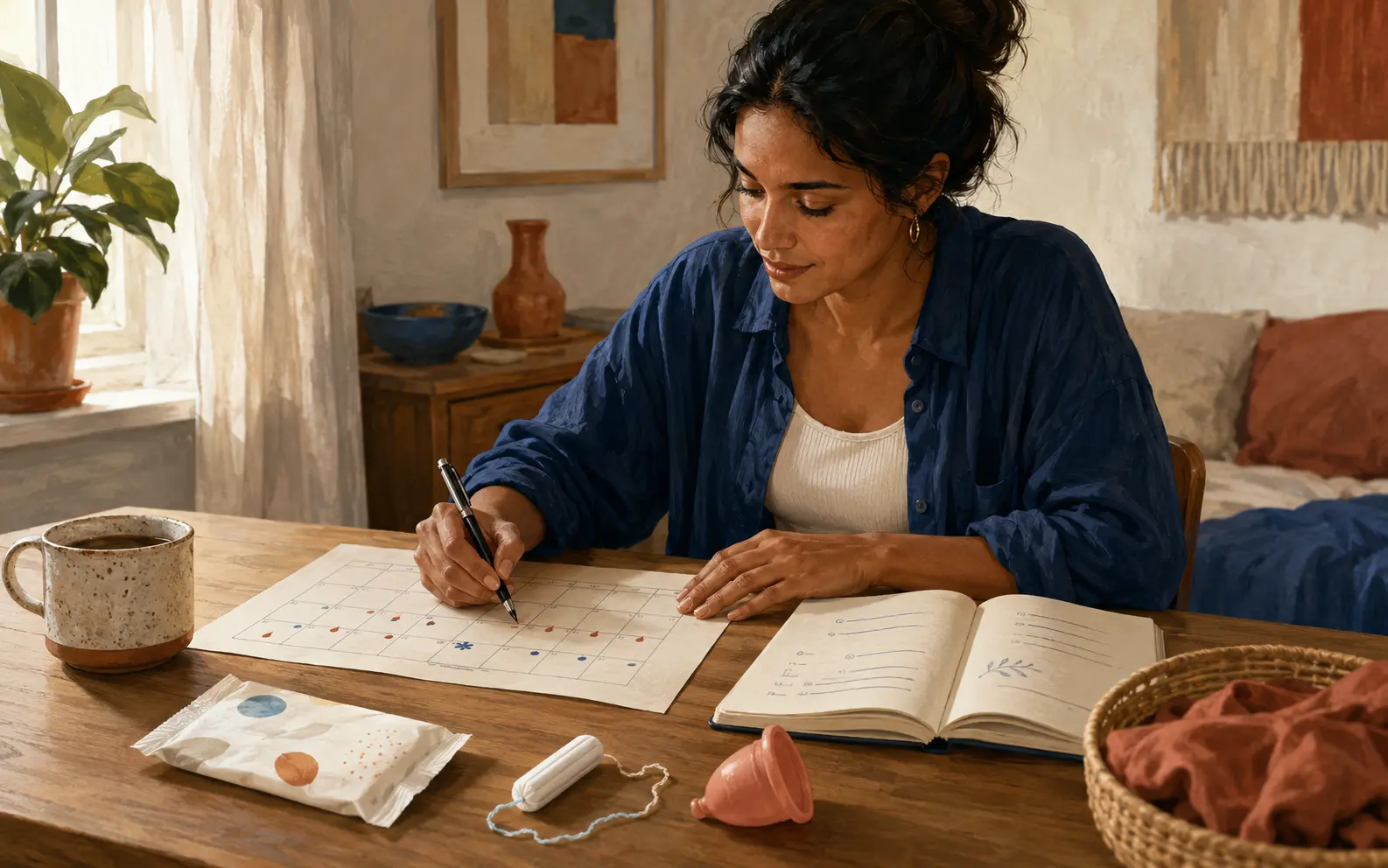
What to record
Start and end dates, flow, clots, pain, bleeding between periods, premenstrual symptoms, and impact on sleep, work, school, exercise, or sex can be useful.
- Your usual pattern is the baseline
- Impact matters as much as a number
- Write one clear note rather than everything
What not to assume
Cycle predictions are estimates. Irregular cycles, puberty, postpartum recovery, breastfeeding, perimenopause, illness, and contraception can make forecasts less reliable.
- A prediction is not contraception
- A missed period has many possible causes
- Pregnancy testing may be appropriate
Privacy choices
A paper calendar, local note, or privacy-conscious app can all work. Review what an app stores, shares, backs up, or uses for advertising before entering sensitive details.
- Use the least data you need
- Know how to delete it
- Avoid intimate free text when a simple category works
Sources behind this guide
Evidence checked July 15, 2026. Independent clinician review is still required before public launch.