Barriers
External or internal condoms and dental dams can reduce many STI risks. Use them correctly and change between people or body sites.
Safer sex and STI knowledge
Understand how STIs spread, which body sites may need testing, how barriers and toys fit, and what changes when sex is vaginal, oral, or anal.
Build a testing conversation
Private testing conversation builder
Select only what feels useful. Nothing is sent or stored.
Anal versus vaginal penetration
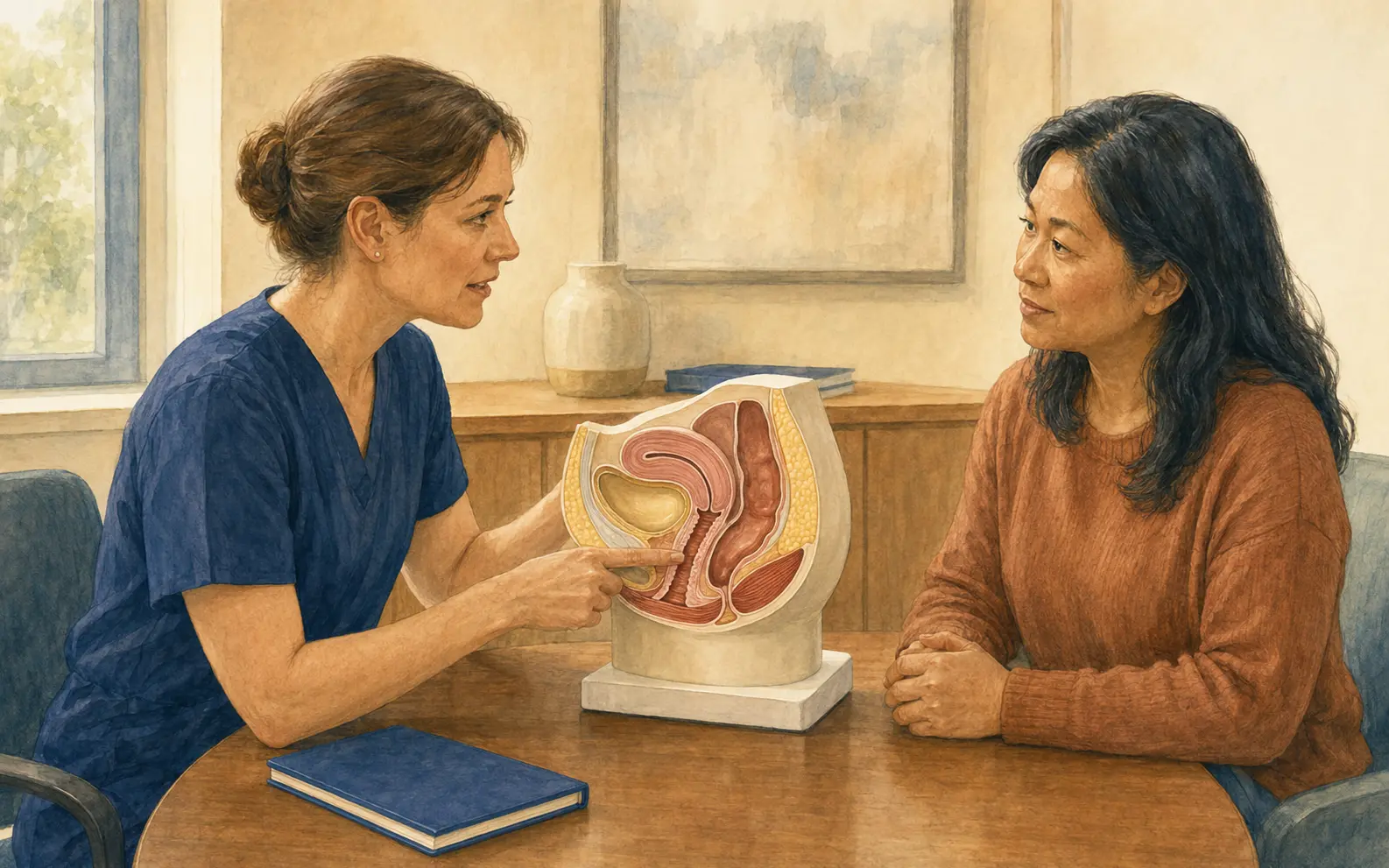
The vaginal canal can lubricate with arousal and is built to stretch. The rectum does not self-lubricate, and its lining can be more easily injured by friction.
Protection is layered
External or internal condoms and dental dams can reduce many STI risks. Use them correctly and change between people or body sites.
Many STIs cause no symptoms. Testing should follow the exposure, body sites, timing, pregnancy, and current guidance.
Vaccination can help prevent HPV and hepatitis B for eligible people.
Most birth-control methods prevent pregnancy but do not prevent STIs.
Talk about last testing, partners, barriers, contraception, symptoms, and what each person agrees to.