01
What can fit within a typical range
- Light spotting can occur with hormonal changes, contraception, pregnancy, friction, infection, or cervical changes.
- Bleeding after menopause should be evaluated even when it is light.
- It can be difficult to tell where blood is coming from without an examination.
02
What to notice
- How quickly are pads or tampons filling?
- Is pregnancy possible?
- Is there pain, weakness, dizziness, fever, or bleeding after sex?
03
When the next step changes
Get emergency help for uncontrolled bleeding, fainting, severe weakness, or pregnancy with severe pain or heavy bleeding.
Arrange prompt evaluation for bleeding after menopause, repeated bleeding after sex, or ongoing unexplained spotting.
04
Safe actions while you decide
Reasonable now
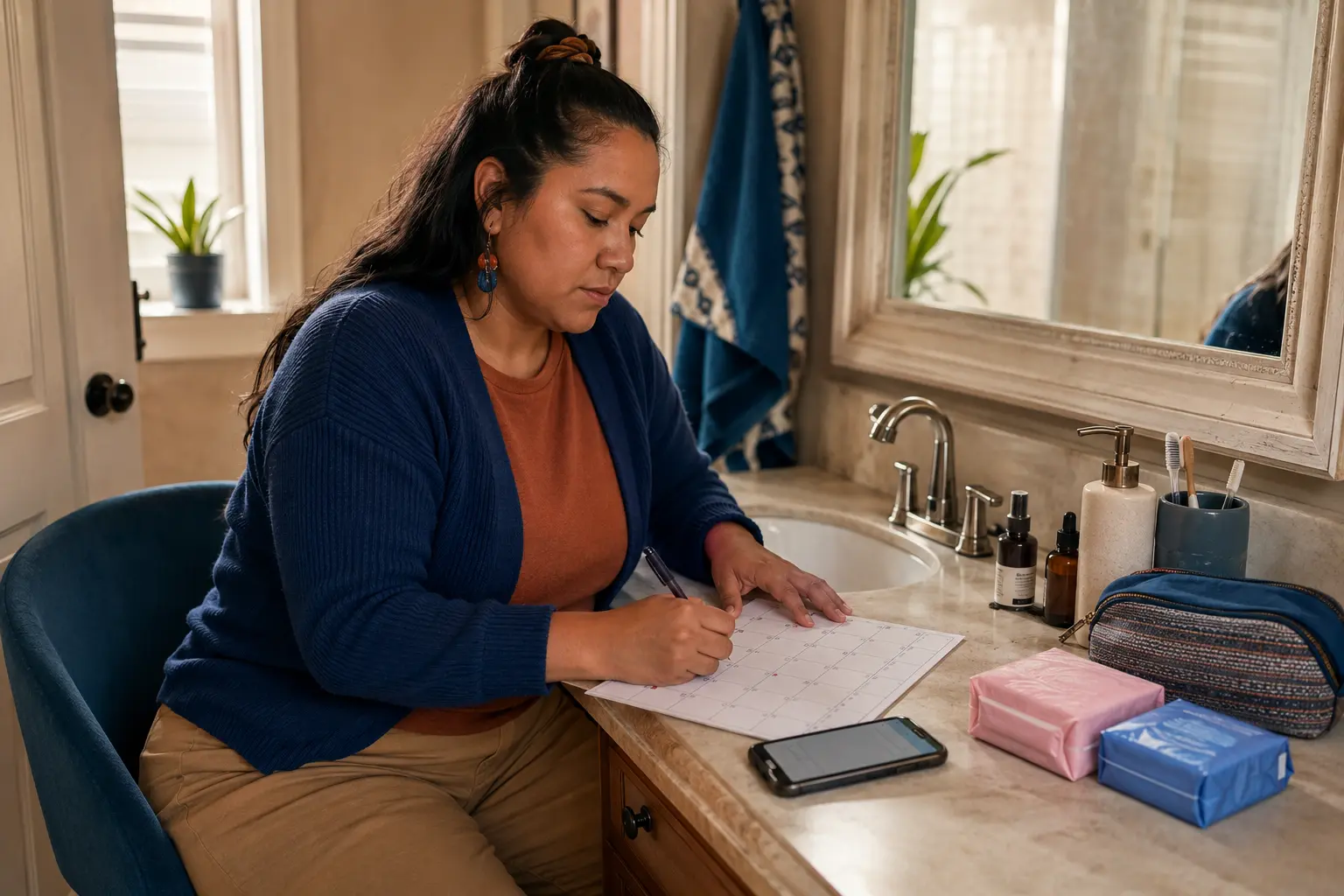
- Track amount and timing
- Use pads if that helps you monitor flow
- Bring medication and cycle details to the appointment
Avoid for now
- Delaying care because the amount seems small after menopause
- Assuming every source is menstrual
05
Sources behind this guide
Evidence checked July 15, 2026. This private review version still requires independent clinician review before public launch.